
Natural Resource Damage Assessment
When natural resources are injured, the stakes are high—financially, legally, and reputationally. Clients face complex claims, competing data, and outcomes that affect communities. Integral’s NRDA experts bring proven expertise across litigation, science, and economics to guide you through the process with a strategy that is as unique as the case. With a team that has supported hundreds of projects nationwide, we have the experience for your negotiations and, if necessary, to take the stand as your testifying expert. We help protect your interests, achieve fair outcomes, and move forward confidently.
NRDA Experts
Theodore D. Tomasi, Ph.D. Senior Principal
Miranda Henning, BCES Managing Principal, Business Director - Health and Ecology
Judi L. Durda Senior Principal
Jen Lyndall, CERP, CSE Principal
Damian V. Preziosi Managing Principal, Strategic Initiatives Director
Chris Pfeifer Senior Consultant
Heather M. Summers Senior Consultant
Maryann Welsch Senior Consultant
Knowledge Share
Collaborative NRDA Strategy Delivers Rapid Resolution and Conservation Benefits
Navigating Natural Resource Damages at Montana's Most Complex Asbestos Site
Strategic NRDA Settlement Eliminates Business Uncertainty While Funding Major Habitat Restoration
Discount Rates, Natural Resource Damages, and the Public Trust
Considering Environmental Justice in Natural Resource Damage Assessment: Injury to Recreation Resources
Considering Environmental Justice in Natural Resource Damage Assessment: Injury to Ecological Resources
Using U.S. Natural Resource Damage Assessment to Understand the Environmental Consequences of the War in Ukraine
If coordination of remediation and restoration under CERCLA is such a good idea, why is it not practiced more widely?
Discounting in Damage Assessments for Ecological Injuries: An Introduction to the Issues
Advancing Methods for Valuing Recreation
Law Seminar International Webinar on Natural Resource Damages Litigation
Multidisciplinary team of ecologists, economists, hydrogeologists, and toxicologists.
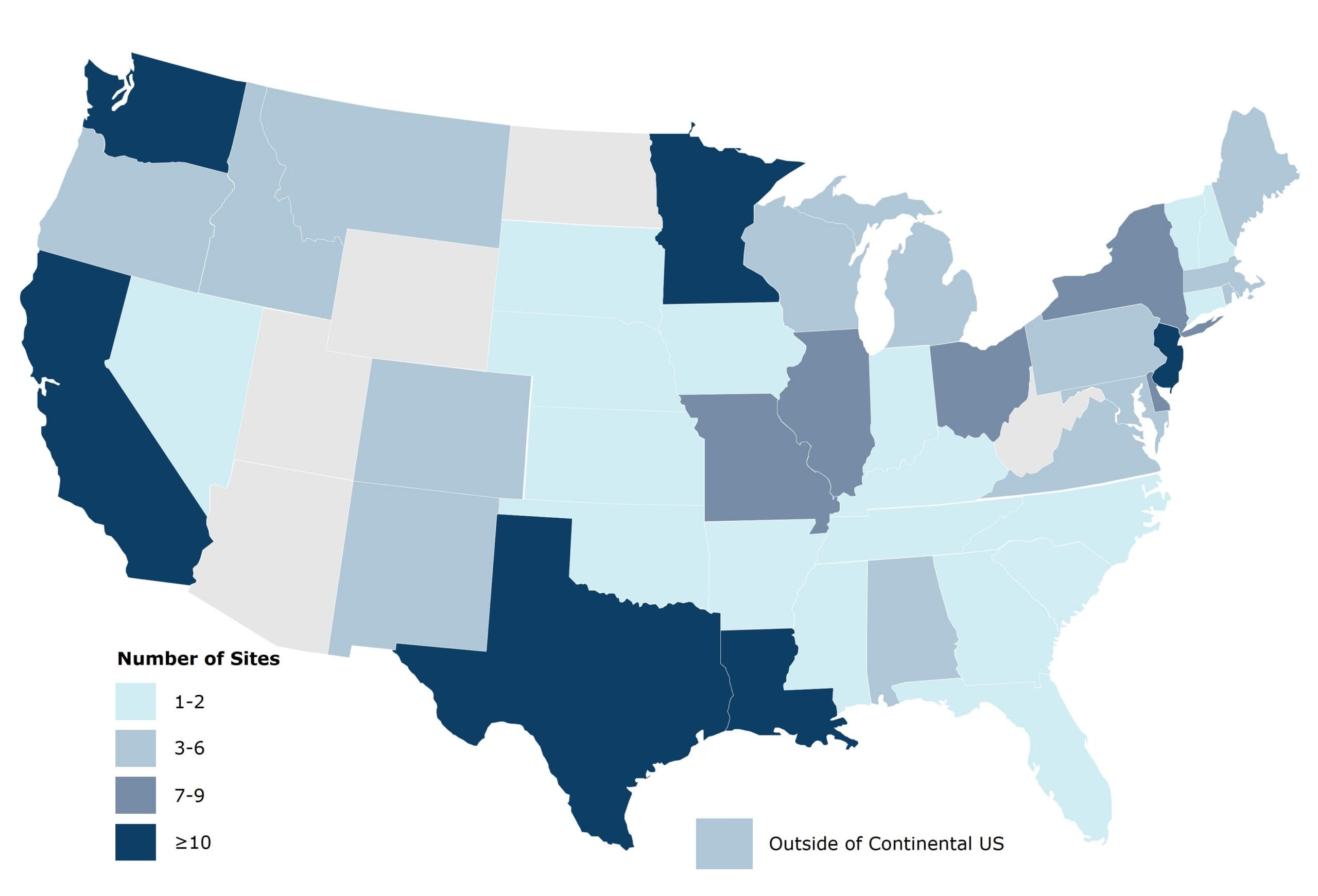
NRDA Project Map
Our experts have worked on hundreds of cases all over the U.S.
Litigation Support and Expert Testimony
When claims escalate, you need experts who can withstand cross-examination and deliver credible science. Integral’s scientists, engineers, and economists provide authoritative testimony, clear reporting, and strategies that dismantle unsupported claims.
Key Capabilities:
- Expert testimony grounded in defensible science
- Identification of flaws in opposing experts’ analyses
- Clear data visualization and reporting for legal settings
- Litigation strategies informed by decades of courtroom experience
Evaluation of Injury to Natural Resources
Integral quantifies injury to ecological services using equivalency-based models—habitat equivalency analysis (HEA), resource equivalency analysis (REA), and habitat-based resource equivalency method (HaBREM)—to translate ecological service losses into measurable restoration needs.
- HEA calculates service-acre-years lost and restoration required, factoring in recovery time and habitat-specific weights.
- REA estimates population-level impacts for discrete resources, using life history and exposure-response data.
- HaBREM integrates habitat and resource interactions, accounting for substitution effects and complex service relationships.
These approaches ensure restoration is scientifically grounded, appropriately scaled, defensible, and aligned with trustee expectations.

Natural Resource Economics
Numbers matter—especially when millions are at stake. Our experts pioneered methods such as trip equivalency analysis to accurately value both losses and restoration benefits. We bring financial clarity that supports sound decisions and cost-effective settlements.
Key Capabilities:
- Valuation of ecological, recreational, and cultural service losses
- Equivalency analysis (HEA/REA) to scale restoration alternatives
- Recreation demand modeling to quantify public use impacts
- Economic analysis that supports negotiation and settlement

FAQs
Our team combines deep technical expertise with strategic negotiation skills. We’re trusted for being balanced, credible, and effective in both cooperative assessments and litigation.
Integral uses a settlement comparison approach to benchmark potential liability. We analyze historical NRD settlements across contaminants, media, and restoration types using a proprietary database that normalizes values via Consumer Price Index- and HEA-derived metrics like discounted service acre-years. This helps clients contextualize their claim and anticipate trustee expectations.
Early restoration involves implementing projects before final settlement or litigation resolution. It can reduce long-term liability (by returning the site to baseline more quickly), demonstrate good faith, and align with trustee priorities. Integral evaluates feasibility and cost-effectiveness using decision-analysis tools and ecological uplift modeling. We also assess how early restoration may influence claim valuation and negotiation dynamics.
Climate change introduces both long-term environmental shifts and episodic extreme weather events that can alter baseline conditions, injury trajectories, and restoration feasibility. Rising temperatures, sea level rise, and increased storm frequency complicate the “but-for” baseline comparison central to NRDA and may require adjusting injury estimates and restoration scaling. Integral incorporates climate factors into NRDA through scenario modeling, sensitivity analysis, and best-practice frameworks that incorporate climate change impacts into baseline, injury quantification, and restoration scaling.