Transforming Superfund Site into Economic Opportunity
Project Summary
Accelerating Cleanup and Redevelopment through Strategic Alignment and Technical Excellence
A fiduciary Trust responsible for cleaning up a 70-acre former wood-treating facility faced extensive contamination, regulatory complexity, and mounting public frustration over the glacial pace of progress. Integral developed and executed a comprehensive strategy that aligned Trust objectives with agency requirements, transforming decades of stagnation into measurable progress. Through rigorous investigation, risk assessment, and remedy design, we’ve positioned 48 of 70 acres for redevelopment by 2027—creating economic opportunity for the community while maximizing the value of available cleanup funds.
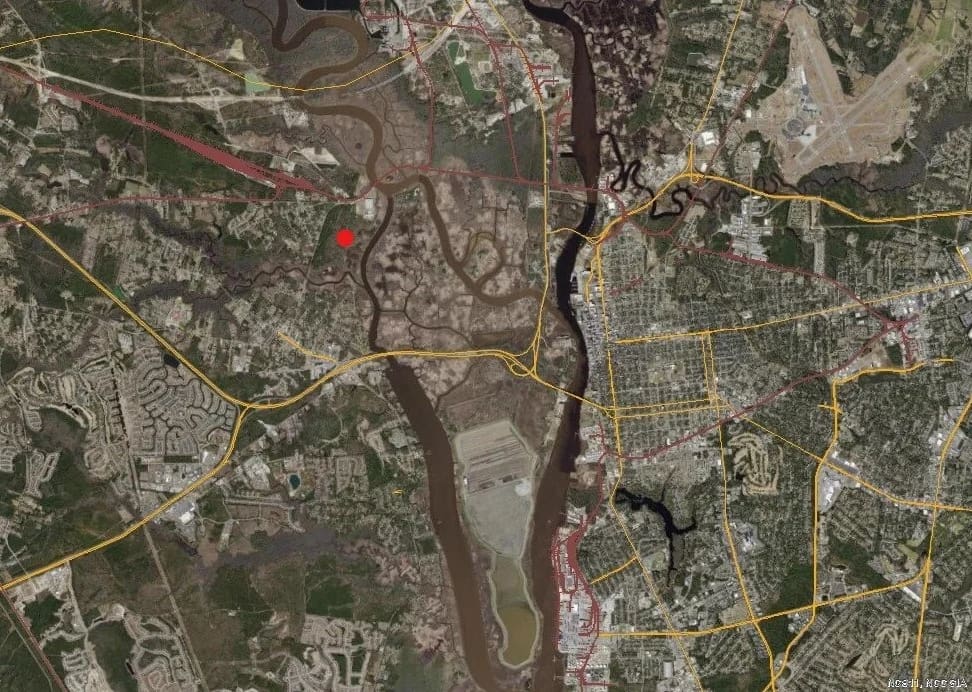
Location: Navassa, North Carolina, USA
Key Personnel
Todd Martin, P.E. Senior Principal
Sara M. Barbuto Senior Consultant
Jane L. Sund, P.E. Senior Engineering Advisor
Challenge
A fiduciary Trust faced the dual mandate of addressing environmental risks from decades of industrial contamination while maximizing community benefit from limited cleanup funds.
The client inherited responsibility for extensive soil, sediment, and groundwater contamination stemming from former wood treatment operations across a 100-acre site encompassing the former industrial facility and adjacent intertidal marsh. Contamination extended to 75 feet below ground surface across six separate operable units, each complex enough to constitute its own “site.”
The project had stalled under previous approaches, creating frustration among the public, the Trust, and regulatory agencies alike. The Trust needed a fundamentally different strategy: one that balanced rigorous agency requirements with fiduciary responsibility to maximize cleanup efficiency and community benefit. Without strategic realignment and technical confidence-building with stakeholders, the site risked remaining unusable indefinitely while depleting limited Trust funds on unfocused investigations.
Our Role
Integral brought strategic thinking and technical excellence to build stakeholder confidence and align complex regulatory requirements with Trust objectives.
We recognized that success required more than technical competency. It demanded a comprehensive strategy grounded in the Trust’s unique objectives, and a conceptual site model (CSM) detailed enough to guide efficient decision-making. Our team combined expertise in site investigation, human health and ecological risk assessment, feasibility studies, remedial design, and construction oversight with proven experience navigating challenging regulatory environments.
What We Delivered
A streamlined investigation and remediation strategy built on consensus understanding and focused data collection.
Our approach centered on developing, testing, and refining comprehensive CSMs for each operable unit. These CSMs became the foundation for sampling strategies, risk evaluations, and remedy design, creating shared understanding among all stakeholders and eliminating wasteful data collection.
Key deliverables included:
- Strategic alignment: Developed and gained consensus on investigation strategy, risk assessment approaches, and remediation pathways across all stakeholders
- Advanced visualization: Created 3-D models describing site hydrogeology and contamination extent, instrumental in achieving consensus understanding and evaluating remediation alternatives
- Natural attenuation analysis: Built comprehensive multiple-lines-of-evidence assessment of natural recovery processes to support protective, minimally-disruptive remedies that optimize available funds
- Streamlined investigations: Focused data collection to meet data quality objectives efficiently and cost-effectively, eliminating redundant or unfocused sampling
- Complete technical documentation: Delivered investigation work plans, remedial investigation reports, human health and ecological risk assessments, feasibility studies, remedial designs (drawings and specifications), and completion reports across multiple operable units
The Result
Our strategic approach has facilitated transformation of stalled progress at the Superfund site to proactive completion of remedial actions to free up large areas of the site for near-term redevelopment opportunities that will ultimately deliver economic growth to the community.
By building stakeholder confidence through technical rigor and strategic alignment with trust objectives, Integral accelerated progress across the entire site:
- First success: Operable Unit 1 (20 acres) removed from the National Priorities List and available for sale and redevelopment
- Near completion: Record of Decision achieved and remedial action 90% complete for Operable Unit 2 (16 acres); anticipated to be available for redevelopment in 2026
- Advancing rapidly: Record of Decision anticipated by end of 2025 for Operable Unit 4 South (12 acres), with remediation completed in 2026 and land available for redevelopment in 2027
- Community impact: By 2027, 48 of 70 acres of developable land will be available for productive use, creating economic opportunity and growth for the Navassa community while approximately 30 acres of intertidal marsh undergo remediation.
The Trust successfully balanced environmental protection with fiduciary responsibility, demonstrating that strategic thinking and technical excellence can transform even the most complex Superfund challenges into community assets.
Project Highlights
- Site scope: 100-acre site including 70-acre former wood-treating facility and 30 acres of intertidal marsh
- Complexity: Six separate operable units with contamination extending to 75 feet below ground surface
- Timeline acceleration: Transformed decades of slow progress into concrete results with three operable units on track for completion by 2027