
Navigating Natural Resource Damages at Montana’s Most Complex Asbestos Site
Project Summary
Transforming Complex Environmental Liabilities into Strategic Settlement
When a major industrial client faced substantial natural resource damage claims from decades of vermiculite mining operations contaminated with amphibole asbestos, they needed more than technical consultants—they needed strategic partners who could navigate the intersection of complex science and high-stakes negotiations. Integral’s multidisciplinary team transformed overwhelming technical data into clear negotiation positions, ultimately securing a favorable settlement that resolved all natural resource damage liabilities.
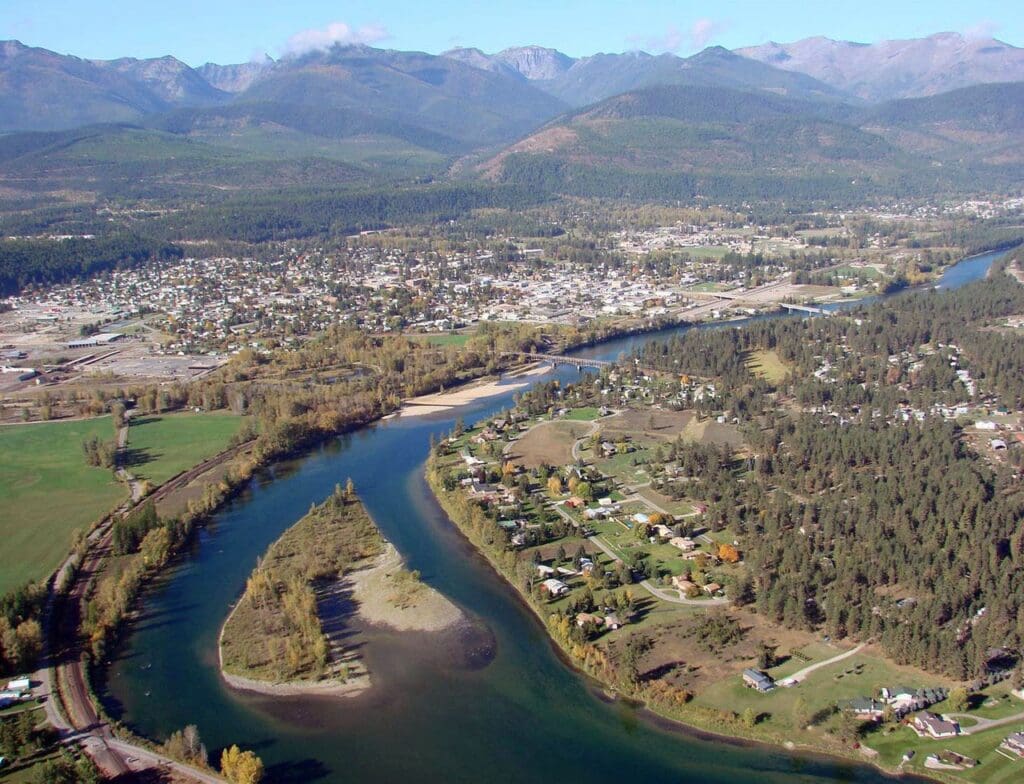
Location: Libby, Montana
Key Personnel
Judi L. Durda Senior Principal
Theodore D. Tomasi, Ph.D. Senior Principal
Heather M. Summers Senior Consultant
Andrew Nicholson, Ph.D. Senior Science Advisor
Challenge
Our client faced potentially significant liability claims for environmental damages spanning aquatic habitats, terrestrial ecosystems, and recreational resources at one of Montana’s preeminent Superfund sites.
The State pursued natural resource damage claims for injuries to local waterways and surrounding terrestrial habitats from the former vermiculite mine operated from 1963 to 1990. The site’s naturally occurring levels of amphibole asbestos created significant technical challenges in distinguishing mining-related impacts from natural background conditions. Without clear scientific differentiation between mine-related materials and naturally occurring minerals, our client risked facing inflated damage assessments based on incomplete understanding of true environmental impacts.
Our Role
Integral assembled a multidisciplinary team of ecological, toxicological, geochemical, and economic experts to build a science-based foundation for strategic settlement negotiations.
Our team brought a multidisciplinary group of specialists to tackle the technical complexity head-on. We developed innovative approaches using multivariate statistical analysis to differentiate mine-related materials from natural erosion deposits—critical for establishing the true extent of mining impacts. Rather than accepting broad assumptions about contamination, we conducted forensic analysis distinguishing site-specific asbestos from naturally occurring materials using fingerprinting of co-occurring constituents and employed sophisticated statistical methods to quantify actual areas of impact versus natural background conditions.
What We Delivered
We transformed mountains of technical data from Superfund site-investigations and risk assessments into clear, defensible positions that became the cornerstone of successful negotiations.
Integral synthesized years of human health and ecological risk assessment data into focused presentations that established factual baselines for injury quantification. We created compelling technical narratives that integrated operational history, geochemical fate and transport modeling, and ecotoxicological evidence into positions the Trustees couldn’t ignore. Our team participated in numerous negotiation sessions, presenting complex scientific findings in ways that moved discussions from speculation to fact-based dialogue. When negotiations moved to mediation, our thoroughly documented technical positions provided the foundation for productive resolution.
The Result
Our client achieved a structured settlement that definitively resolved all natural resource damage liabilities while providing certainty for long-term planning. The settlement amount was less than 20 percent of initial demands by the Trustees.
The March 2023 settlement agreement established a clear payment structure of initial payment and subsequent annual payments, allowing our client to manage the financial impact strategically and enabling the State to move forward with restoration planning. Most importantly, the settlement amount better reflected the scientific evidence of environmental impacts rather than speculative assessments, validating our approach of letting facts drive negotiations. This resolution eliminated ongoing liability uncertainty, allowing the company to move forward with confidence while supporting Montana’s restoration efforts based on real environmental needs.
Project Highlights
- 27-Year Mining Legacy: Successfully resolved damages from operations spanning 1963–1990
- Innovative Chemical Forensics: Distinguished mine-related amphibole asbestos from natural minerals
- Multimedia Assessment: Addressed impacts to aquatic, riparian, and terrestrial habitats