
Navigating Complex Multiparty Natural Resource Damage Claims in a Cooperative Assessment Framework
Project Summary
How a major chemical manufacturer achieved equitable allocation in a multiparty natural resource damage assessment through strategic technical analysis and negotiation.
A major chemical corporation faced significant liability exposure as one of multiple parties named in a natural resource damage assessment claim at a former manufacturing facility along the Shenandoah River. Integral Consulting provided comprehensive technical analysis and strategic negotiation support that successfully allocated responsibility among all contributing parties, reducing the client’s liability from the entirety of the claim to their proportionate share. This multidisciplinary project required integrating ecological assessment, toxicology, hydrogeochemistry, and historical facility operations analysis to support settlement negotiations with state and federal Trustees.
Location: Virginia, U.S.A.
Key Personnel
Judi L. Durda Senior Principal
Heather M. Summers Senior Consultant
Jarrod D. Gasper Senior Consultant
Andrew Nicholson, Ph.D. Senior Science Advisor
Challenge
A major chemical manufacturer faced disproportionate liability in a complex multiparty environmental claim requiring technical evidence to support equitable allocation.
Our client was named in a multiparty natural resource damage assessment claim at their former manufacturing facility in Virginia. The Trustees’ claim included damages to aquatic habitat—including mussels, fish, and aquatic-dependent wildlife—as well as groundwater contamination. The client faced the prospect of bearing responsibility for the entire natural resource damage claim despite being only a minor contributor to the overall environmental impacts at the 440-acre site.
The case moved rapidly with bimonthly Trustee meetings requiring quick analysis and response to new information while simultaneously building the client’s technical case. The project demanded a multidisciplinary approach that evolved from initial ecological focus to include detailed understanding of the facility’s operational history and contaminant fate and transport. With multiple potentially responsible parties involved—including the federal government, which had operated the plant during World War II for wartime rayon production—the case required extensive historical document review to support allocation negotiations with state and federal Trustees.
Our Role
Integral brought specialized natural resource damage assessment expertise and strategic settlement negotiation experience to navigate this complex multiparty claim.
We understand that successful allocation in natural resource damage cases requires more than technical competence. It demands the ability to synthesize complex ecological, toxicological, and geochemical information into clear, defensible arguments that Trustees and co-parties can evaluate objectively. Our team combined deep expertise in ecological damage assessment, chemical fate and transport modeling, and settlement strategy to protect our client’s interests.
Our approach included:
- Systematic claim review and historical reconstruction – We compiled and analyzed historical sampling data to create a comprehensive timeline of contaminant releases, then investigated the life history characteristics of affected ecological resources to assess injury claims.
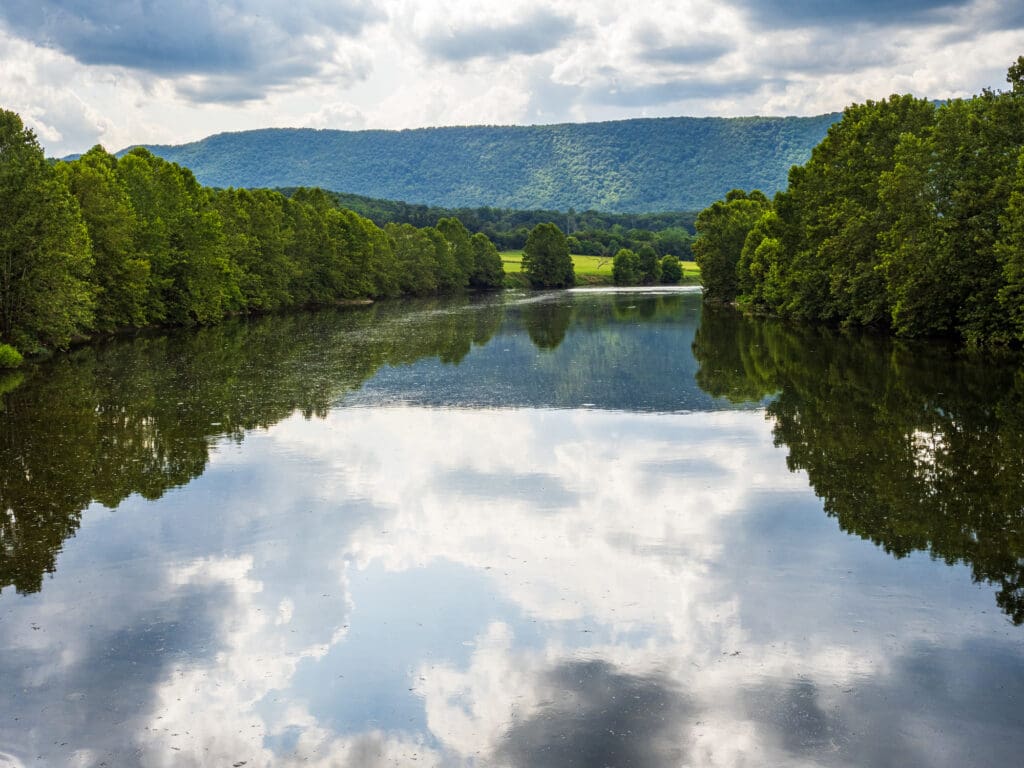
- Multidisciplinary fate and transport analysis – Our ecological and hydrogeochemistry teams collaborated to understand how contaminants moved from the facility to the South Fork Shenandoah River and transported downstream through geochemical analysis of metals behavior, forensic analysis of Aroclor PCB fingerprints, and sediment transport evaluation.
- Historical research and forensic documentation – Our team visited Virginia Department of Environmental Quality offices and local libraries to extract operational records, historical news articles about river conditions, and legacy sampling data, reconstructing this information into a clear factual timeline that demonstrated the contributions of each potentially responsible party.
Throughout the process, we maintained regular engagement with Trustees and co-parties, identifying key strategic drivers and focusing negotiations on reaching consensus on critical technical factors.
What We Delivered
Our team provided technical analysis and strategic support that enabled our client to achieve an equitable settlement reflecting their actual contribution to environmental damages.
We synthesized complex information across ecological resources, chemical toxicity, geochemical fate and transport, and facility operations history into clearly articulated presentations for Trustees and potentially responsible parties. Our comprehensive analysis identified key strategic drivers that focused settlement negotiations on the most relevant technical factors.
Through detailed forensic work, we clearly documented the operational history and contaminant release patterns that allowed for defensible allocation of responsibility among all contributing parties. We prepared and delivered numerous technical presentations to Trustees that built consensus around the evidence and supported productive settlement discussions. Our multidisciplinary approach integrated ecological damage assessment with chemical fate and transport analysis to create a complete picture of site impacts and party contributions.
The Result
Our client achieved an equitable settlement that more fairly reflected their proportionate responsibility, significantly reducing their liability exposure.
The case concluded with a consent decree between the U.S. Department of the Interior, the Commonwealth of Virginia, our client, and several federal agencies in June 2025. Under the settlement, the Trustees recovered approximately $4.1 million to address natural resource injuries and fund restoration projects for fish, birds, and benthic invertebrates in the Shenandoah River system.
Through our technical analysis and allocation work, our client’s liability was reduced from bearing the entire claim to their proportionate share based on their actual operational contribution to site contamination. Our work established a technically defensible basis for natural resource damages and the client’s allocated responsibility that satisfied both Trustees and co-parties. The settlement provided certainty and closure on a complex liability issue while ensuring funds would support meaningful ecological restoration in the affected watershed.
Project Highlights
- Affected Resources: Aquatic habitat including mussels, fish, aquatic-dependent wildlife, and contaminated groundwater
- Key Contaminants: Carbon disulfide, zinc, and polychlorinated biphenyls (PCBs)
- Multiparty Complexity: Negotiations involved multiple private parties and federal government entities across 50 years of facility operations