
Water Resource Management Services
Water is important to your company, your products, your people, and your success. Water management can take many forms, but it all has the same goal – use water responsibly with minimal impact on the environment. Our water resources team is a diverse, internationally experienced, and passionate group that will work with you to solve your challenges big or small. From identifying sources of water to treatment and monitoring after discharge, we specialize in innovative solutions for water use and water management across the country.
Water Resource Management Experts
R. Jeffrey Davis, P.E., CGWP, CWRE Principal, Water Resources
Michael Sweetenham, P.G. Senior Consultant
David Livermore, R.G., L.H.G., CWRE Senior Principal
Kelsey Kirkland, L.G. Senior Scientist
Melissa Armstrong, P.E. Senior Consultant
Marcia Greenblatt, Ph.D., P.E. Managing Principal, Business Director, Investigation and Remediation
Mandy Tulich, P.G. Senior Consultant, Practice Director - Hydrology, Geosciences, and Chemistry
Jerritt Collord Data Solution Architect
Featured Projects
Aquifer Storage and Recharge Design for a Western City
Optimizing Water Use Where Resources Are Scarce
Planning for Water Management in Mines
Industry & Manufacturing
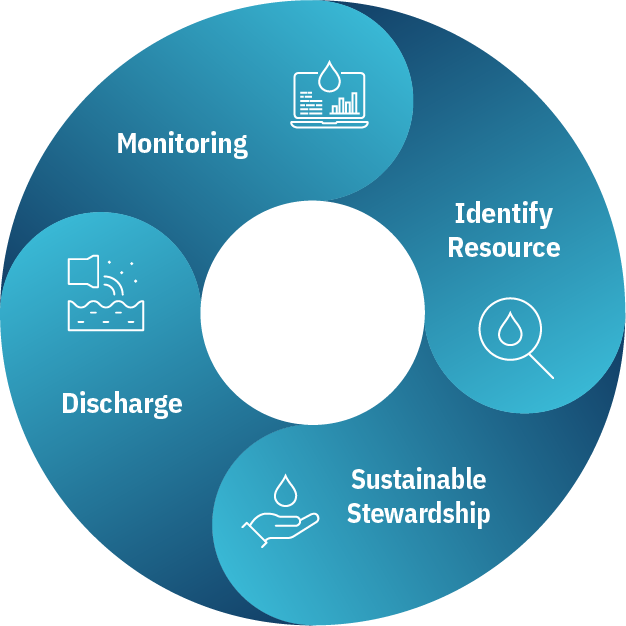
Water plays a key role in the industrial process. It can be difficult managing the sourcing, stewardship, discharge, and monitoring of the water needed to run your business. Integral works with industrial clients to help them acquire the water they need, use it in the most sustainable manner, and discharge it meeting all regulatory requirements with little to no impact on the environment. We understand each phase comes with unique challenges specific to your location, regulatory environment, and industry, and our engineers and scientists are here to help.
Areas of expertise
- Sustainable stewardship as it relates to your organization’s ESG objectives
- Water rights permitting
- Quantifying water systems (surface and groundwater flow and transport) with modeling tools
- Sampling and reporting
- NPDES & UIC permitting
- Environmental and human health risk assessment
Mining
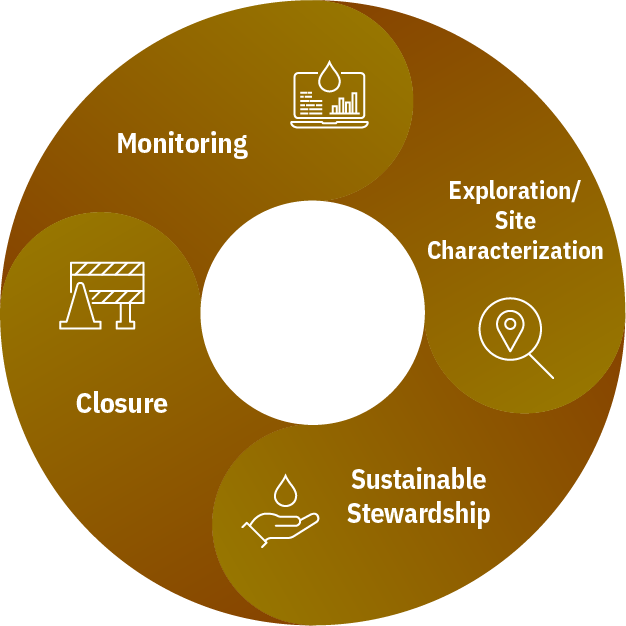
Strategic water management can save an organization time, money, and headache in the mining industry. Clients expect consultants to not only help solve the problem of water management, but to do so in an efficient and cost effective manner. Integral works with mining clients to manage their water starting from exploration to post closure and reclamation. We support our clients in their dewatering strategy and environmental impact statements when exploring or expanding mining sites. Our clients rely on our modeling skills to design sustainable systems for water management in their mining process. Then when the time comes to close the site, we are here to design closure strategies that will save time and money.
Areas of expertise
- Dewatering strategies
- Permitting
- Quantifying water systems (surface and groundwater flow and transport) with modeling tools
- Modeling and conceptualization of water system (both groundwater flow and transport and hydro geochemistry)
- Water management modeling
Municipalities
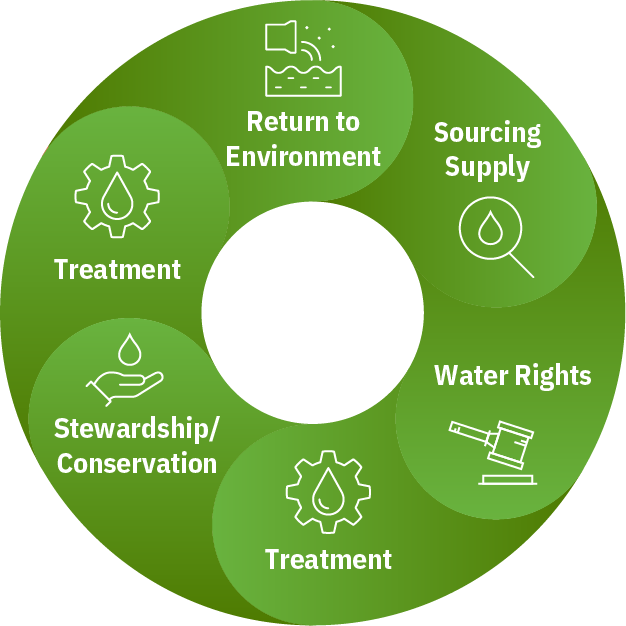
When it comes to water, Municipalities ask these two key questions, “where are we going to get the water our community demands?” and “what are we going to do with our used water?”. Sourcing water for a municipality is a complex problem involving rights, permitting, treatment, engineering logistics, and sustainability. Each situation is unique and must be understood holistically. Integral’s engineers and scientists help municipalities develop planning and forecasting for water needs, design aquifer storage and recharge (ASR) systems, and design treatment systems to turn contaminated water into multiple uses of reclaimed water. We gather the information to understand the environmental system our clients are in and build creative sustainable solutions to meet their needs from source to discharge.
Areas of expertise
- Aquifer Storage and Recharge
- Stormwater design and compliance monitoring
- PFAS and other emerging contaminant treatment design
- Injection and pumping well design
- NPDES permitting
FAQs
Sea-level rise can cause saltwater intrusion into coastal aquifers, reducing the availability of potable water and threatening infrastructure in low-lying areas. Communities may need to adopt adaptive strategies such as groundwater monitoring, managed retreat, or protective infrastructure to maintain water quality and supply. Legal frameworks for water rights and allocation are also evolving to address these risks.
ASR is a method of injecting treated water into underground aquifers for later use, helping to secure water supplies during droughts or seasonal shortages. It supports long-term water resilience, reduces reliance on surface reservoirs, and can be integrated with stormwater management and groundwater modeling to optimize storage and recovery.
Mining for critical minerals like lithium consumes large volumes of water—up to half a million gallons per ton—and often occurs in regions already facing water stress. This creates risks of aquifer depletion, contamination, and social conflict. Sustainable practices such as water recycling, direct lithium extraction technologies, and nature-based solutions are essential to mitigate these impacts.
Water rights determine who can use groundwater and how much, often based on historic use, surface acreage, or beneficial use principles. As climate change and sea-level rise alter water availability, regulatory frameworks and adaptive governance are critical to ensure equitable distribution and sustainable groundwater use.
Emerging contaminants are chemicals or materials—such as PFAS (per- and polyfluoroalkyl substances) and microplastics—that are increasingly detected in water but lack comprehensive regulatory standards. PFAS are highly persistent, mobile in groundwater, and linked to potential health effects on development, liver, and thyroid function. They are found in firefighting foams, consumer products, and industrial discharges. Because they resist degradation, PFAS can remain in aquifers for decades, creating challenges for treatment and compliance. Current mitigation strategies include granular activated carbon (GAC), ion exchange, and advanced oxidation, but costs and long-term performance vary. Regulatory frameworks are evolving, and proactive monitoring is critical for utilities and private well owners.