
Stormwater Monitoring & Compliance
Collaborative stormwater solutions that transform complex compliance challenges into streamlined operational success.
When stormwater compliance poses a risk to regulatory standing and threatens project timelines, you need technical experts who use innovative technology to enhance monitoring efficiency. Integral helps public and private sector clients navigate complex requirements through our unique capabilities for monitoring challenging locations and advanced treatment systems. We provide detailed compliance tracking and strong stakeholder communication to ensure deadlines are met without regulatory surprises, including litigation support when challenges arise.
Technical Leaders
Kenneth Kronschnabl Principal, Practice Director - Sediment and Water Investigation and Monitoring
Christian Kocher Principal
Paul Wisniewski, P.G. Senior Science Advisor
Steen Trump, CESSWI, QSP Consultant
Danielle Gonsman Consultant
Amy Howk Consultant
Carolina Zuri, E.I.T., QISP Consultant
Andrew J. Halmstad, P.E. Senior Consultant
Related Projects
Stormwater Treatment System at a Sawmill: California
Stormwater Source Control: Willamette River, Oregon
Optically-Based Evaluation of Stormwater as a Potential Source of Polychlorinated Biphenyls (PCBs) to Pearl Harbor, Hawaii
Municipal Stormwater Compliance Services
For more than three decades, Integral has delivered effective NPDES stormwater permit compliance monitoring services for state agencies and municipalities across California and beyond. We design monitoring studies tailored to each community’s unique requirements, employing advanced techniques including remote-controlled composite sampling, discrete manual sampling, flow monitoring, laboratory data validation, and regulatory reporting.
- Consistent permit compliance services implementation since the late 1980s
- Innovative strategies that streamline monitoring requirements and reduce costs
- Deep understanding of regional municipal separate storm sewer (MS4) NPDES permits and evolving regulatory landscapes
- Creative approaches to monitoring trash in stormwater systems using visual inspections and volumetric measurements
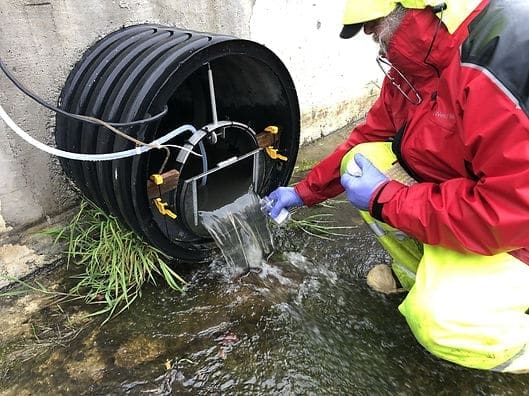
Best Management Practice (BMP) Evaluations
We assess structural stormwater treatment device effectiveness through detailed inflow and outflow monitoring that demonstrates treatment performance. Our BMP evaluation approach integrates advanced sampling methods and data analysis to show measurable improvements and ensure regulatory compliance for low impact development (LID) systems and various treatment technologies including tree wells, biofiltration strips, swales, porous pavers, flow-through planters, and modular wetlands.
- Automated, remote-controlled, custom-programmed instrumentation and sampling systems
- Laboratory data validation, management, and comprehensive statistical analysis
- Expertise equipping devices for semi-automated monitoring even under challenging site conditions
- Proven track record of avoiding common errors that hinder compliance and program effectiveness
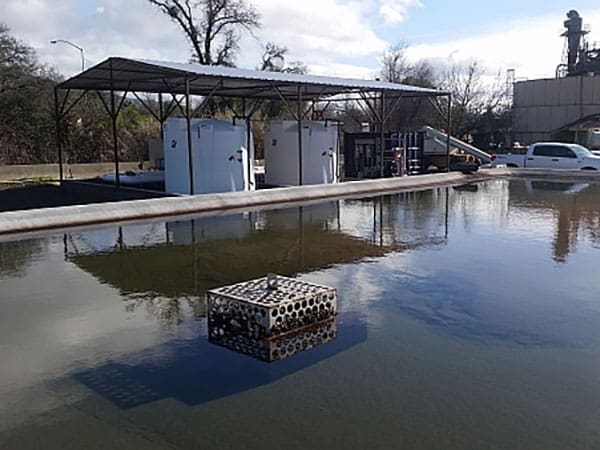
Special Studies
We collect and analyze specialized data to inform regulatory standards and support science-based policy decisions for federal agencies and state and regional boards. Our special studies program employs innovative methodologies to address complex regulatory questions, demonstrating when updates to compliance standards are justified and where monitoring technique improvements can enhance regulatory outcomes.
- California’s most comprehensive biotic ligand modeling data set providing regulators robust scientific evidence for updating copper and zinc standards
- Emerging technology adoption for fecal indicator bacteria (FIB) monitoring, comparing optical methods with traditional laboratory techniques to support new EPA-approved methodologies
- Pilot studies using detection dogs to screen legacy industrial areas for contaminants in stormwater runoff, supplemented with traditional verification monitoring

Industrial Stormwater Compliance
We help industrial facilities meet stringent stormwater regulations through tailored monitoring programs and adaptive management approaches designed to reduce exceedances, streamline reporting, and support long-term compliance. Our hands-on approach includes training, follow-up inspections, regular check-ins, and ongoing support for both office and field needs.
- Visual inspection and stormwater sampling with BMP inspections and recommendations for upgrades
- Stormwater Pollution Prevention Plan (SWPPP) preparation and updates with Stormwater Multiple Application and Report Tracking System (SMARTS) database compliance and maintenance
- Level 1 and 2 Exceedance Response Action (ERA) reporting, annual evaluations, and troubleshooting for exceedances
- Facility personnel training and corrective action planning
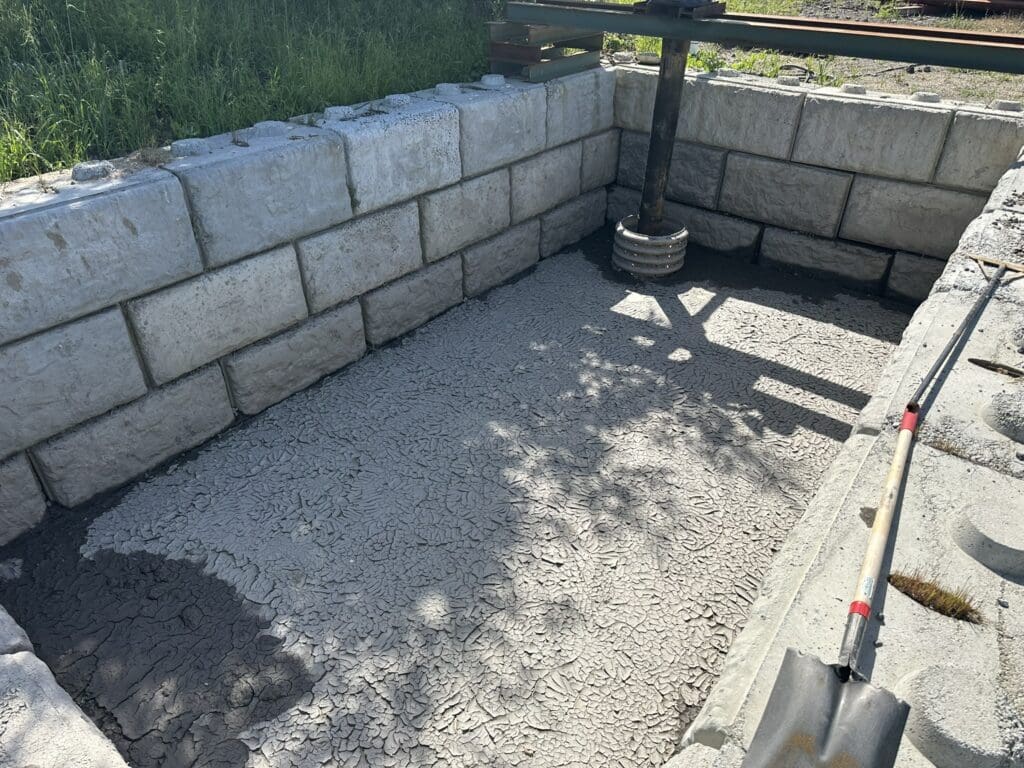
Litigation Support Expertise
We offer decades of expertise in litigation support for clients facing Clean Water Act lawsuits, providing strategies to prevent unwanted attention from nongovernmental organizations and comprehensive defense when legal challenges arise.
- Expert declarations and reports defending against unsupported allegations
- Settlement negotiations minimizing operational impacts with accelerated compliance evaluation
- Expert depositions and court testimony with litigation-ready documentation
- Follow-on compliance consulting to adhere to settlement agreements and prevent future lawsuits

Construction Stormwater Compliance Services
We support California construction contractors with comprehensive compliance assistance for the State Water Resources Control Board’s NPDES Construction General Permit (CGP), Caltrans Standard Specifications, and project-specific SWPPP or water pollution control programs.
- Construction site inspections focused on stormwater BMPs with emphasis on erosion and sediment control
- SWPPP and 401 Permit stormwater sampling and analysis ensuring regulatory requirements are met
- Onsite training on stormwater BMPs and SWPPP procedures for construction workers
- Communications facilitation with project managers, site supervisors, and agency staff regarding compliance issues
- Report preparation and submission for inspections, sampling, notices of discharge, exceedances, and annual compliance documentation
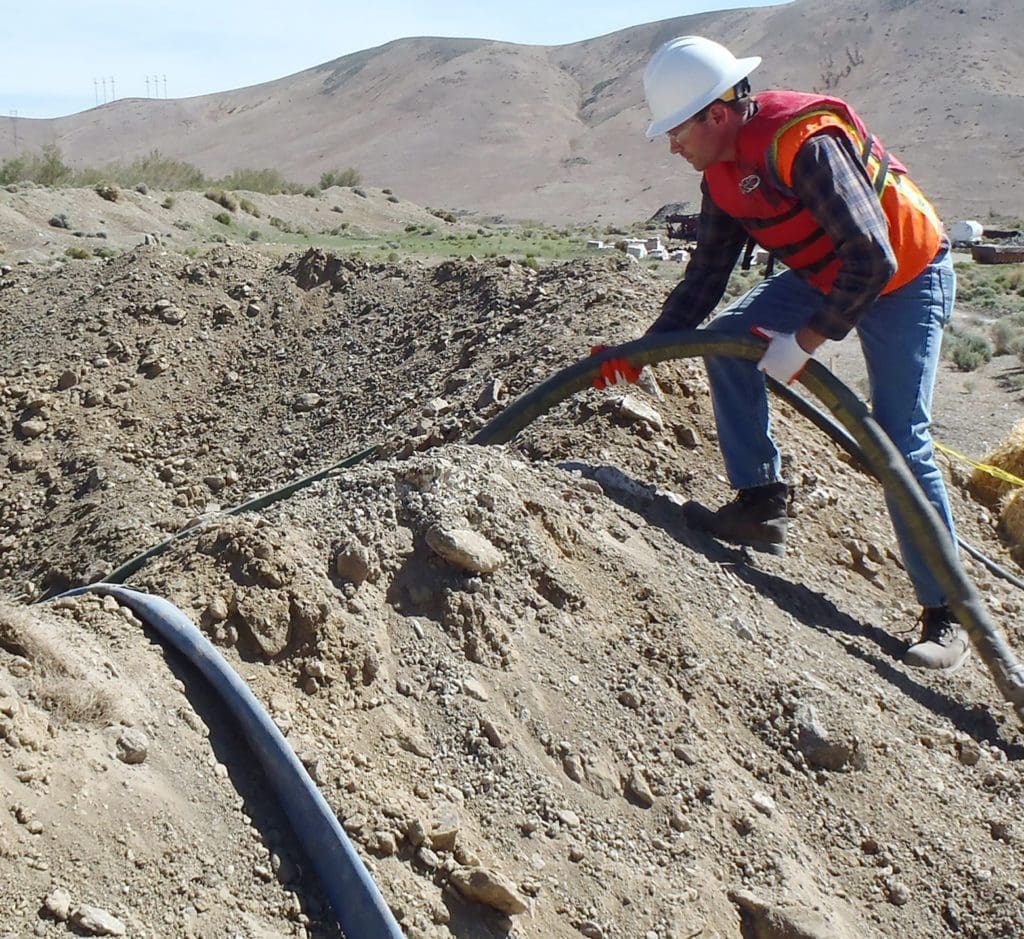
FAQ Section
Integral takes a proactive approach by identifying potential exceedance risks early and implementing targeted BMPs before violations occur. We design site-specific monitoring programs that align with your facility’s operations and pollutant profiles, ensuring accurate data collection and timely reporting. By integrating compliance planning with operational workflows, we help clients stay ahead of regulatory thresholds and avoid costly enforcement actions.
Integral stands out through our combination of deep regulatory expertise, litigation-ready documentation, and strategic compliance planning. We don’t just monitor—we help clients understand the regulatory landscape, anticipate challenges, and implement solutions that align with both environmental goals and business objectives. Our experience with high-risk industrial sectors and complex site operations allows us to tailor services to each client’s unique needs while supporting enforcement actions and settlement negotiations.
Integral deploys fully customized monitoring systems equipped with programmable data loggers that adapt to any monitoring scenario. This versatility enables seamless integration with level and flow monitors, water quality sensors, and automated samplers. Our telemetered systems support remote control and real-time monitoring to ensure data accuracy and operational efficiency.
Integral draws on broad experience in receiving water trash monitoring to help municipalities comply with NPDES permits. Using both visual inspections and volumetric measurements, we collect comprehensive data while focusing on cost-effective solutions that meet all permit requirements.
Ensuring compliance involves conducting regular site inspections, collecting and analyzing stormwater samples, maintaining accurate records, and submitting required reports to regulatory agencies. Additionally, investigating BMPs and providing ongoing staff training are crucial to maintaining compliance and preventing permit violations.